With the dawn of modernism, a new understanding of living came to the fore: forms should not only be beautiful, but also serve everyday purposes and convey a positive attitude towards life.
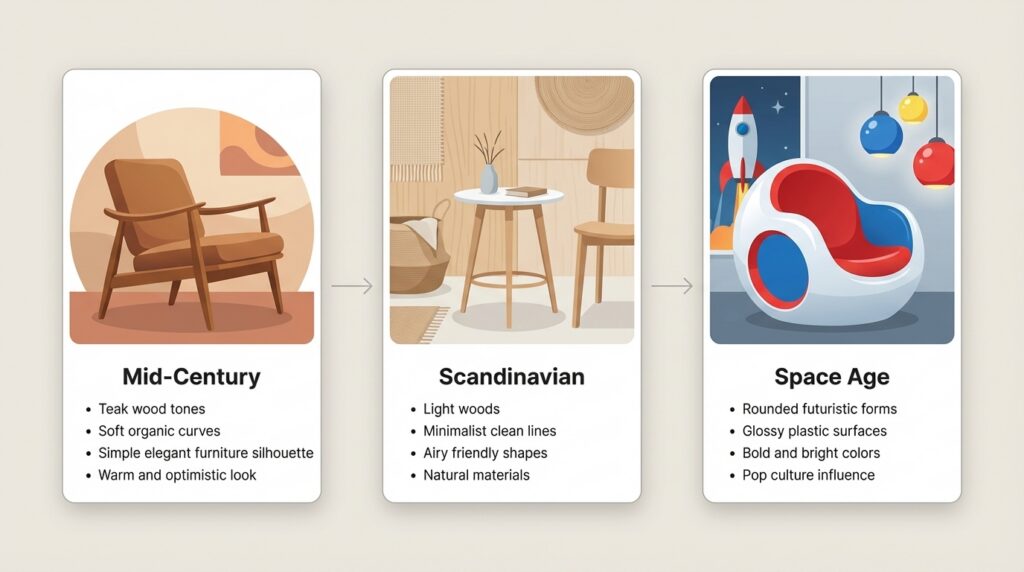
Mid-Century Modern (approx. 1945–1970)
Organic shapes, teak wood, and simple elegance define mid-century design. Scandinavian influences, new materials, and an optimistic attitude to life characterize this style, which remains extremely popular to this day.
Scandinavian Design (approx. 1950–1970)
Light woods, functionality, and minimalism characterize this approach. Furniture appears light, open, and friendly—ideal for people who prefer clear shapes and natural materials.
Space Age (approx. 1965–1975)
Round, futuristic shapes, intense colors, and plastic dominate this style. It appeals to buyers who like creative, experimental designs.