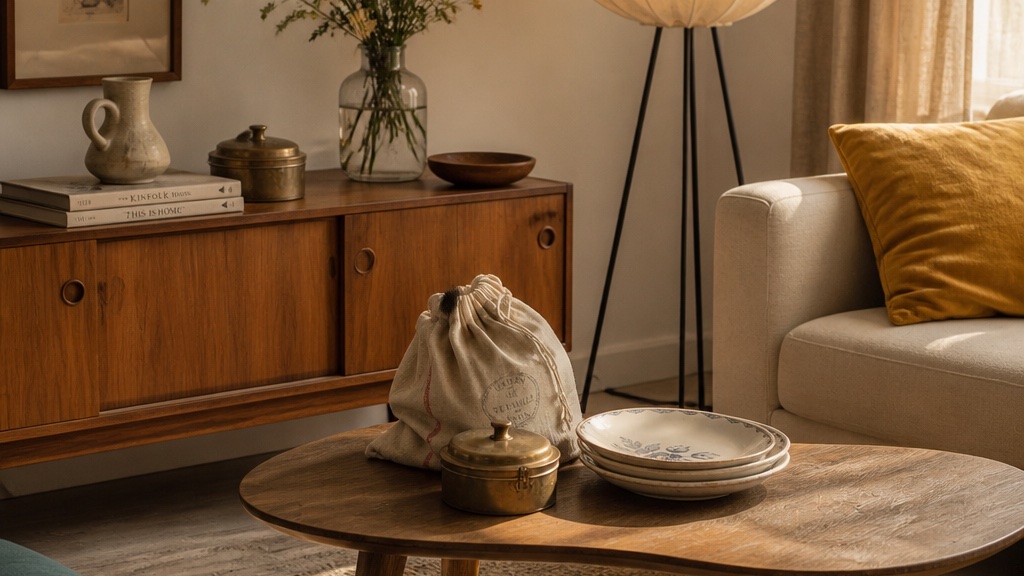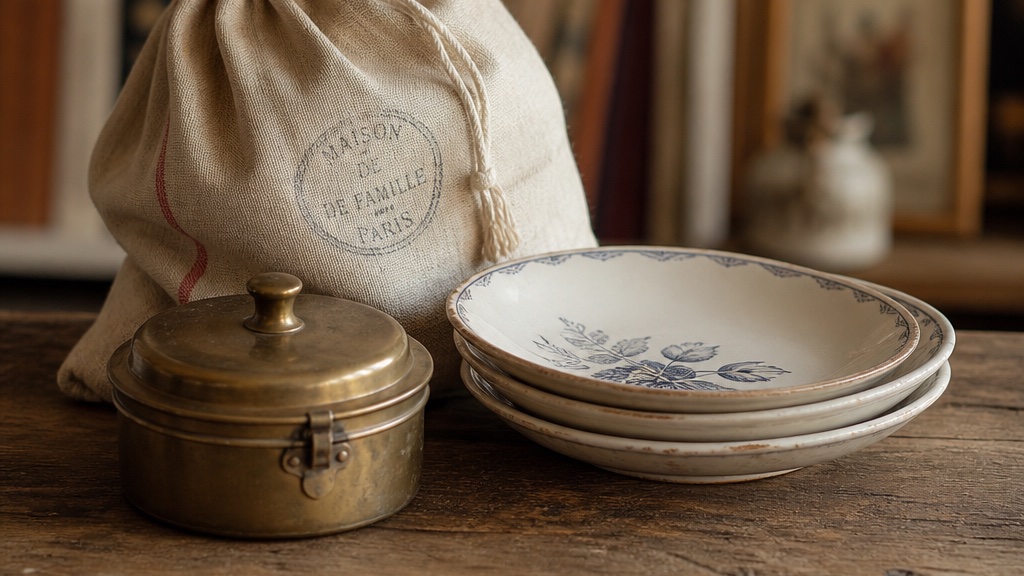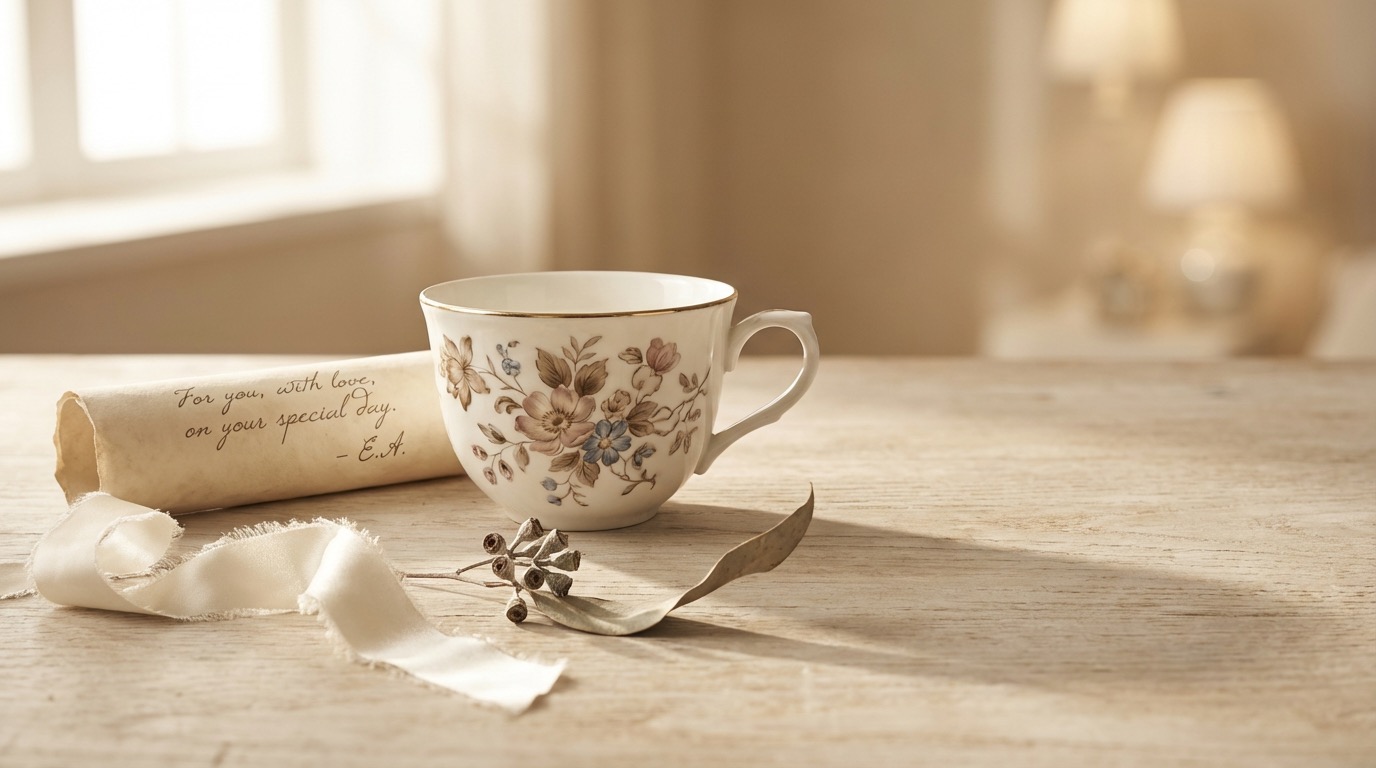
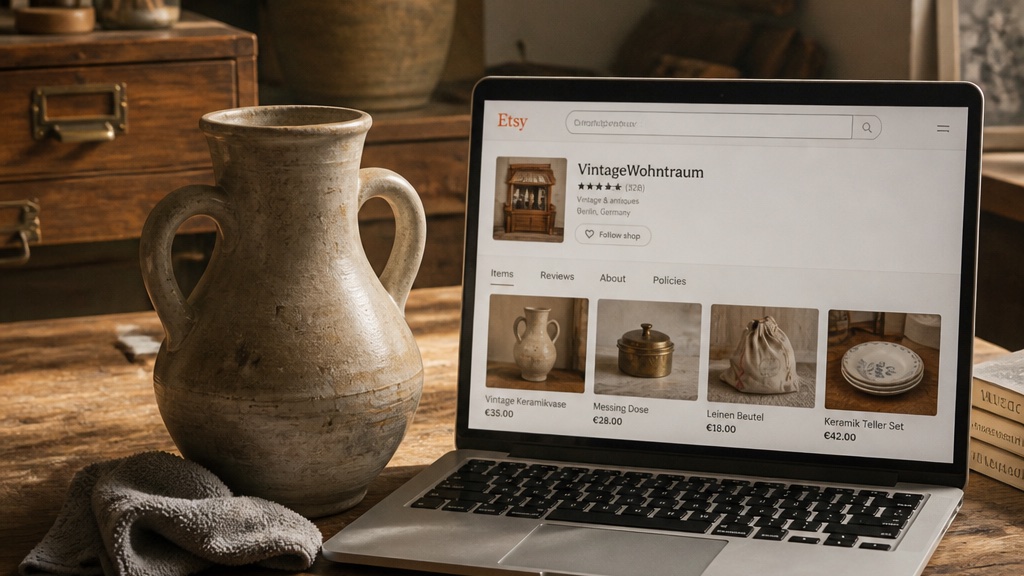
A dusty box in an attic. A stack of plates at the flea market, half hidden under an old tablecloth. A glance that lingers. That’s usually how it starts. But between the moment I pick a piece up and the moment it sets off, packed, on its journey to a new home, lies a process that involves far more than “take a photo, upload, done”. Here I take you behind the scenes at Bavarian Heritage – step by step.
The hunt: why not every piece makes it into the shop
I’m always on the lookout. At flea markets around Munich, at house clearances, in antique shops or in attics that a short phone call sometimes leads me to. The hunt is the loveliest and, at the same time, the most unpredictable part of the work.
Not everything that’s old is automatically good. And not everything I like fits the shop. With every piece I ask myself three questions:
- Does it have quality? Material, workmanship, condition – is the substance right?
- Does it have character? Does it tell a story? Is it a typical representative of its time, a special design, an interesting brand?
- Will it make someone happy? Sounds simple, but it’s the most important filter. A piece has to work in a new home – not just stand on a shelf.
Perhaps 20 to 30 percent of what I take a closer look at actually comes home with me. The rest stays where it is – or passes on to colleagues whose range suits it better.
The research: what have I actually got here?
At home, the detective work begins. And honestly, that’s the part that fascinates me most. I turn every piece over, looking for bottom marks, impressed stamps, signatures or model numbers. With porcelain, the bottom mark often reveals the maker and the period – a Rosenthal stamp from the 1950s looks different from one from 1975.
My tools for this: specialist literature, brand databases, dedicated forums and sometimes an exchange with other dealers. I want to know as much as possible about every piece before it goes into the shop. Because anyone who buys vintage also buys the story behind it.
Sometimes a piece can’t be identified with certainty – in that case I say so honestly in the description. Better transparent than speculative.
The preparation: careful, not perfectionist
Now it gets hands-on. Depending on the material and condition, I clean the pieces carefully. Porcelain and ceramics with lukewarm water and a soft cloth. Brass with a special cleaner, if the patina can take it. Wood with a gentle care oil.
One important principle applies here: I don’t restore, I prepare. The marks of time belong to a vintage piece. A small scratch, a slight discolouration, a tiny glaze irregularity – that’s not a flaw, that’s biography. I remove dirt and dust, but not the history.
If a piece has a relevant defect – a hairline crack, a chip, a missing lid – I document and describe it clearly. No surprises after unpacking.
The photography: showing the piece as it is
Product photos are everything in online retail. With vintage pieces all the more so, because each one is unique. I photograph in daylight, usually against a plain, neutral background – light linen, an old wooden board or simply a clean white surface.
My standard set includes:
- An overall view from the front and at a slight angle
- Detail shots of marks, patterns, special features
- Flaw documentation – every chip, every crack gets its own photo
- A size reference, whenever the proportions might be unclear in the photo
No over-the-top styling, no filters that distort the colour. The piece should look the way it really is – in the best light, but honest.
The listing: where facts and stories come together
Writing the product description is the final creative step. I always start with the hard facts: maker, material, dimensions, approximate date of origin, condition. That’s the foundation.
Then comes the context: which era does the piece belong to? What makes the design typical of its time? Why is it special? This is where the results of the research flow in. I want you, as you read, not only to know what you’re buying – but also to understand what you’re holding in your hands.
And finally the tags and attributes for Etsy search, the right category, the shipping price. Then the listing goes online.
The shipping: the last mile with care
When an order comes in, it’s packed carefully. Porcelain in tissue paper and bubble wrap, sturdy boxes, no loose parts. Wherever possible I use recycled packaging material – used boxes, filling material that’s already been used before. That’s not a marketing gimmick, it simply fits the underlying idea: reuse things rather than produce new ones.
It’s more than a business
The path from attic find to Etsy listing sometimes takes an afternoon, sometimes a week. There’s research in it, handwork and an honest dose of enthusiasm for things that already have a life behind them. That’s exactly what the vintage trade means to me: not simply selling goods, but giving pieces a second chance – and bringing them together with people who recognise their value.
Come and browse the shop
Every piece in the Bavarian Heritage Etsy shop has been through exactly this journey. If you’re curious about what’s new right now – or which stories the current finds have to tell: browse the Bavarian Heritage Etsy shop now.