Every piece of historical furniture bears traces of its time—craftsmanship details, signs of wear, materials, and shapes that tell a story beyond mere function.
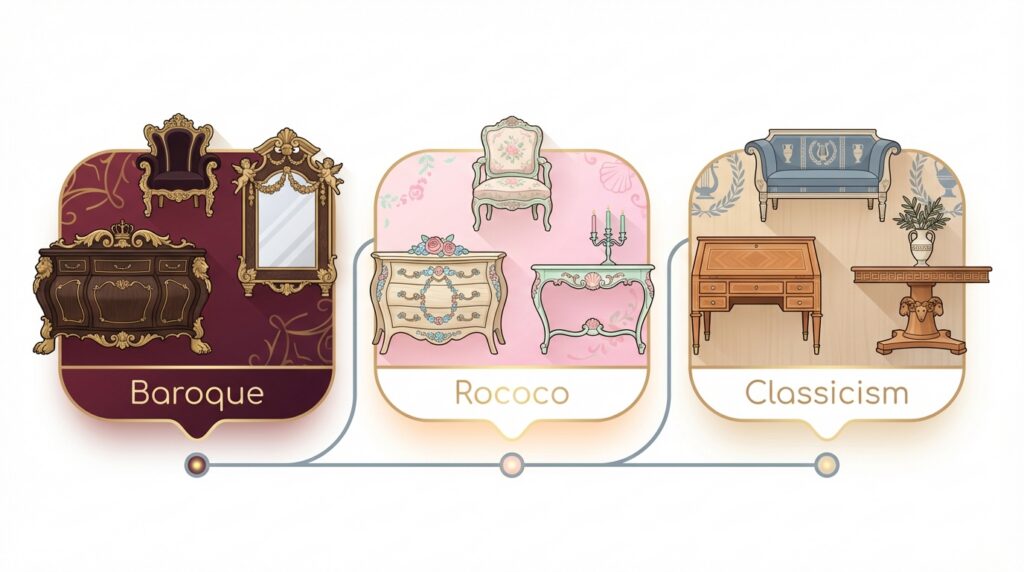
Baroque (until around 1750)
The Baroque period stands for opulence and drama. Furniture from this period is heavy, richly decorated, and made from dark, high-quality woods such as mahogany, walnut, or ebony. Gold decorations, inlays, and opulent carvings characterize this style. Baroque furniture appeals to people who appreciate precise craftsmanship and expressive forms.
Rococo (approx. 1730–1780)
In the Rococo period, the dramatic forms of the Baroque era gave way to lighter, more playful lines. Asymmetry, pastel shades, and floral motifs dominate. Gentle curves and filigree ornaments give the furniture a poetic, delicate aura – ideal for buyers looking for grace and decorative elegance.
Classicism (approx. 1770–1840)
The classicist style emerged as a counter-movement to excessive ornamentation. Clear lines, symmetry, and inspiration from antiquity define the design. Light woods and minimalist decorations create a timeless, calm aesthetic. Classicist furniture appears structured and harmonious – preferred by people who appreciate elegance without excess.